
Living with the 2025 Volvo EX30 Single Motor Extended Range: My Honest Owner Review
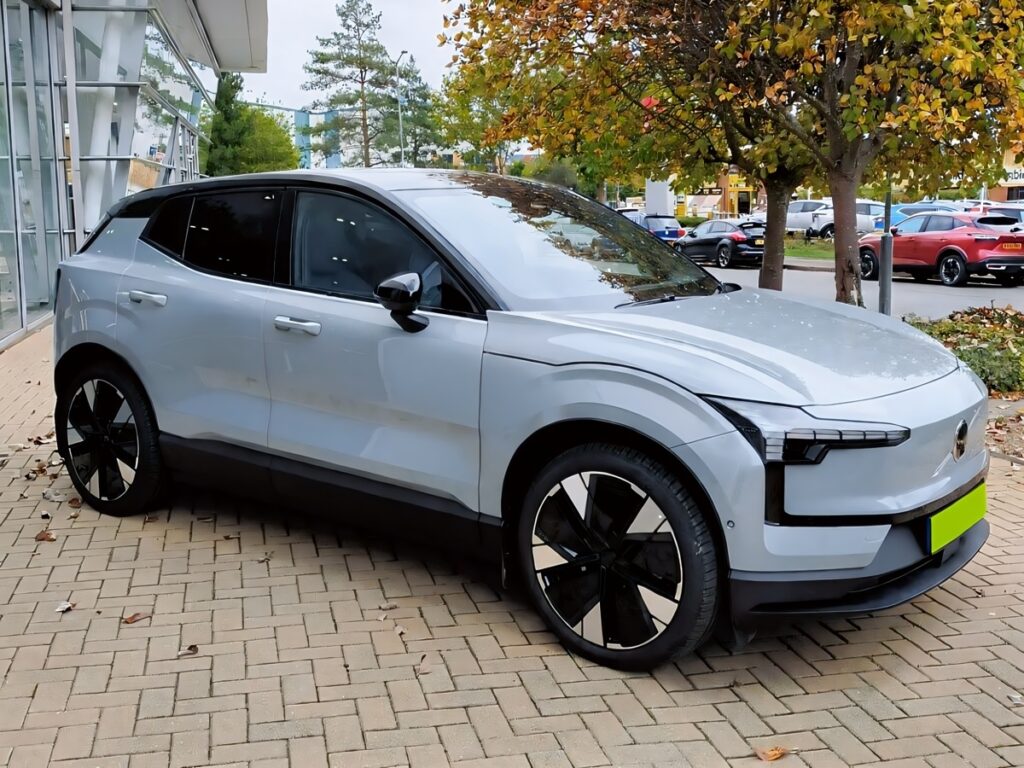
Making the move into my very first electric car, I wanted something compact yet punchy, modern, and refined. I settled on a 2025 Volvo EX30 Single Motor Extended Range finished in Cloud Blue with diamond-cut aero alloy wheels and a contrasting black roof. Having owned the car for over a year and covered between 5,000 and 10,000 miles, my ownership experience has been a fascinating mix of brilliant driving dynamics, ultra-low running costs, and some frustrating dealership warranty hurdles.

Vehicle Specifications & Why I Chose the Volvo EX30
My car is the Single Motor Extended Range specification, housing the larger 69 kWh NMC (Nickel Manganese Cobalt) battery (64–65 kWh usable) paired with a rear-mounted electric motor. It delivers a seriously brisk 272 PS (268 bhp / 200 kW) and 343 Nm of torque to the rear wheels, launching from 0–62 mph in just 5.3 seconds on its way to a 112 mph top speed. Despite its compact city-friendly footprint (4,233 mm long and 1,838 mm wide excluding mirrors), it packs a practical 318-litre boot (up to 400 litres including underfloor storage, expanding to 1,000 litres with the 60:40 rear seats folded) plus a 7-litre front load compartment (“frunk”) for charging cables.
What really sold me on the EX30 during my test drive was how effortlessly smooth and powerful it feels out on the road. For a compact SUV, the instant pace and refined ride quality make every journey a pleasure.
The Positives, Favourite Tech & ‘Best-Kept Secret’
One of the standout aspects of living with the EX30 is its completely stripped-back, Scandinavian buttonless interior. There are no traditional instrument dials or cluttered dashboard switches; everything operates cleanly through the central 12.3-inch portrait infotainment screen. While some drivers worry about minimalist cabins, having every control and bit of vehicle data centralised on that sharp central display is actually the car’s ‘best-kept secret’—once you get used to the layout, daily operation is second nature.
When it comes to onboard technology, a few standout features make daily driving effortless:
-
Single-Control Drive & One-Pedal Operation: Having drive, reverse, and braking controlled seamlessly makes town and country driving remarkably easy.
-
Cold-Weather Comfort: The heated seats, heated windscreen, heated door mirrors, and heated steering wheel are fantastic during frosty UK mornings.
-
Speed Alerts: The audible alarms for excessive speed are genuinely helpful for keeping your licence clean when driving a car this quick and quiet.
The Negatives: The 70% Battery Recall & Dealership Service
While I love the car itself, my ownership journey hasn’t been without major frustrations from Volvo and the dealership network. Shortly after purchasing the car, Volvo notified me of a high-voltage battery module problem (part of the wider safety recall affecting 69 kWh Extended Range models), instructing me not to charge the battery above 70%.
Naturally, capping the charge at 70% noticeably reduced my usable driving range, and it took a staggering eight months for Volvo to finally rectify the problem and replace the affected battery modules!
On top of the battery recall, I experienced several smaller niggling faults that required the car to go back to the dealership on two or three separate occasions. Because these were classed as warranty repairs, the dealership refused to provide me with a courtesy replacement car—which I found to be very poor customer service on their part.
Real-World Range & Post-Fix Battery Performance
Now that the battery module replacement has finally been completed, the central screen reports that the battery health is running at 100%.
In everyday driving, I achieve an average of around 180 miles from an 80% charge, and roughly 240 miles when fully charged to 100% (compared to the official WLTP combined figure of up to 295–304 miles). Given that my annual mileage is under 5,000 miles, that real-world range comfortably covers all of my journeys without ever needing to rely on the public charging network.
Charging Setup & Running Costs
Because I cover fewer than 5,000 miles a year, I do 100% of my charging at home and have never needed to use a public charger. My home setup and running costs break down as follows:
| Ownership Category | My Setup & Experience |
| Home Charging Unit | myenergi zappi (7 kW) — reliable, smart, and effortless to plug in at home. |
| Electricity Supplier & Tariff | EDF EV Tariff — provides a cheap overnight off-peak electricity rate. |
| Cost Per Full Charge | Less than £7.00 for a full charge, delivering around 240 miles of range (under 3p per mile). |
| Public Charging | Never used; home charging covers 100% of my driving needs (though the car supports up to 153–175 kW DC rapid charging). |
| Insurance |
Insured personally; sits around Insurance Group 38E, and I have found EV insurance noticeably more expensive than a traditional petrol or diesel car. |
(Prices correct as of November 2026)
Despite the higher insurance premium, the EX30 is definitely saving me money overall compared to a conventional petrol or diesel car—getting 240 miles of driving for under £7 on my overnight EDF tariff is tough to beat.
What’s Next on My EV Radar?
Even after dealing with an eight-month wait for the battery module fix and frustrating dealership warranty service, the way the EX30 drives and operates day-to-day still wins me over.
In fact, if I were to hand back my keys tomorrow, I would swap it straight for another Volvo EX30.
Review by Martyb