
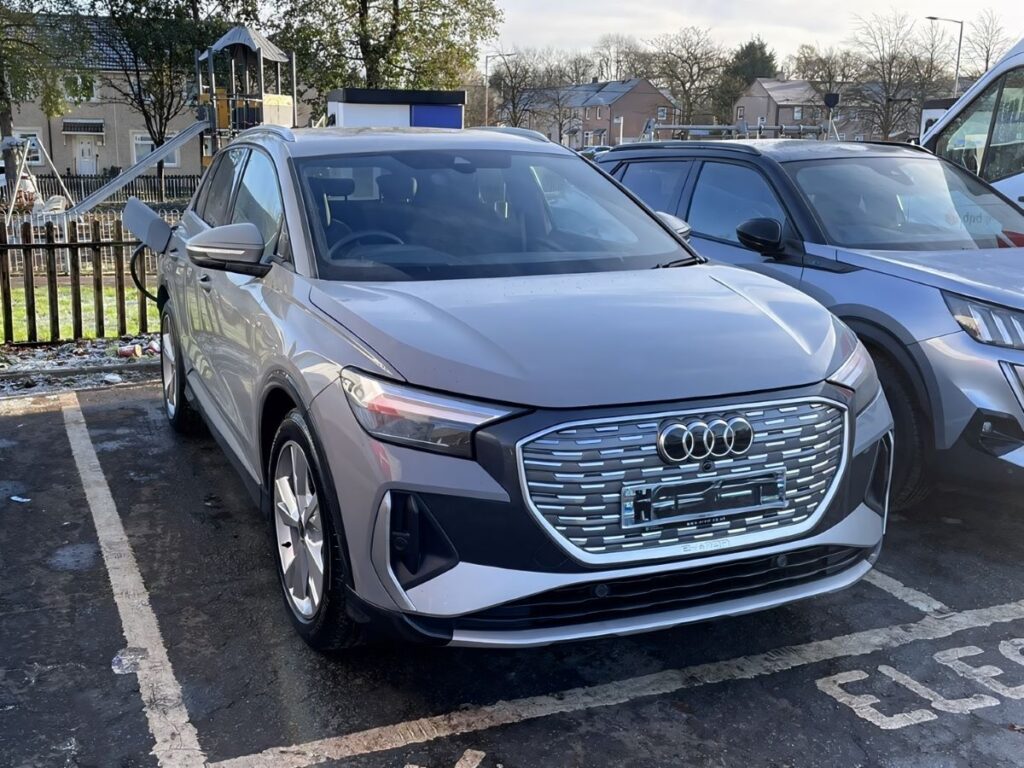
2022 Audi Q4 e-tron 40 S line Owner Review: How My 82kWh Company EV Has Performed Over 55,000 Miles
In this long-term Audi Q4 e-tron 40 S line owner review, Gerry Millar shares his candid verdict after 3 to 4 years and 55,000 miles behind the wheel of his 2022 82kWh (76.6kWh usable) company car. From impressive battery longevity and Augmented Reality head-up display navigation to frustrating touch-sensitive steering wheel controls, charger flap repairs, and saving 90% on fuel costs compared to diesel, here is what the Q4 e-tron is really like to live with every day.

Quick Vehicle & Ownership Summary: At a Glance
-
Owner Reviewer: Gerry Millar
-
Make & Model: Audi Q4 e-tron 40 S line (SUV)
-
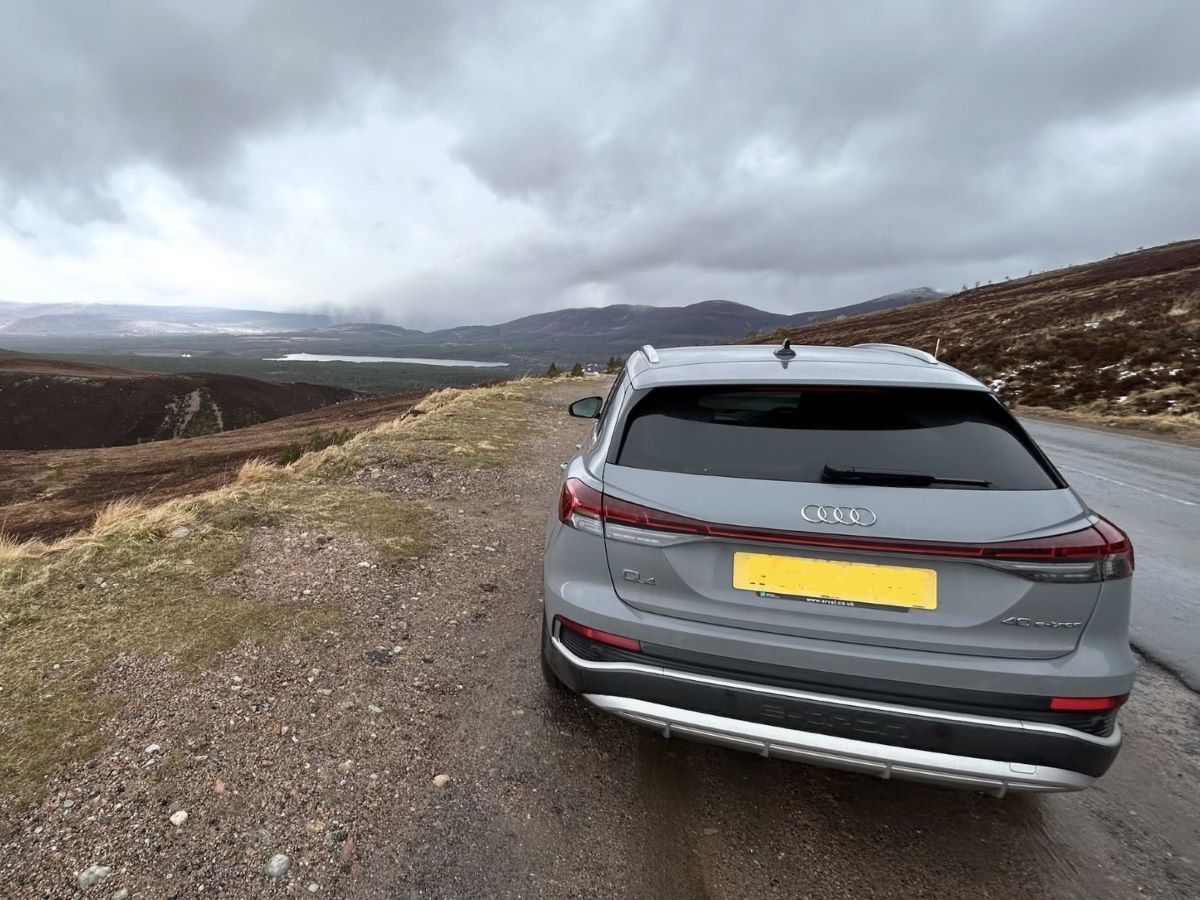
Exterior Colour: Grey
-
Powertrain: 150kW (204PS) Single Motor, Rear-Wheel Drive (RWD)
-
Battery Size: 82kWh gross / 76.6kWh usable
-
Specification & Optional Upgrades: S line trim fitted with the optional Comfort Pack and Tech Pack (including Augmented Reality Head-Up Display, Sonos stereo, Park Assist Plus, and dual-phone connectivity)
-
Length of Ownership: 3–4 years
-
Current Mileage: 50,000–60,000 miles (approx. 55,000 miles driven)
-
Estimated Annual Mileage: 10,000–15,000 miles
-
Previous EV Experience: First electric car
-
Average Real-World Range (80% Charge): 230 miles in summer / 190 miles in winter
-
Home Charging Unit: Pod Point Solo
-
Electricity Supplier: ScottishPower
- Recommended Public Charging Network: Unlocked Tesla Superchargers.
Why I Chose the 2022 Audi Q4 e-tron S line
The 2022 Audi Q4 e-tron was my company car choice and my very first electric vehicle. When I was comparing options on the company car list, two main things drew me to the Q4 e-tron. First, it offered a great specification—especially as mine is an S line model upgraded with both the Comfort Pack and the Tech Pack.
Second, unlike so many modern EVs that bury every single cabin function inside menus, the Audi kept actual physical buttons for everyday essentials like the heater and heated seat controls. Not having to mess around with an infotainment touchscreen every time you want to adjust the temperature makes a huge difference on the move.
Interior Space, S line Styling & Everyday Comfort
One of the biggest strengths of the Q4 e-tron is that it feels like a traditional, well-sorted car with proper buttons to press. Despite its compact SUV footprint on the outside, the MEB electric platform frees up tonnes of room inside the cabin for both the driver and rear-seat passengers.
In S line specification, the car looks genuinely sporty on the road, and the front sport seats have a really supportive, high-quality feel that has kept me comfortable across 55,000 miles of driving.
Favourite Tech & Best-Kept Secret: Augmented Reality Head-Up Display
Because my car is fitted with the optional Tech Pack and Comfort & Sound Pack, it has plenty of onboard kit. Here is how the standout features perform in daily life:
-
Augmented Reality (AR) Head-Up Display Satnav: This is hands-down both my favourite piece of tech and the car’s ‘best-kept secret’. You can’t see it at all unless you are sitting in the driver’s seat, where it projects floating navigation arrows directly onto the windscreen in your line of sight. It is a really nice extra and proves especially helpful during busy city-centre driving.
-
Simultaneous Dual-Phone Connectivity: As someone running a company car, the ability to connect two mobile phones to the infotainment system simultaneously is brilliant for juggling work and personal calls seamlessly.
-
Sonos Premium Sound System: While the upgraded Sonos stereo is good overall, I have to be honest and say it isn’t quite as impressive as you would expect for the money.
Real-World Summer vs Winter Range & Battery Health After 55,000 Miles
Over the last 3 to 4 years, I have clocked up roughly 55,000 miles (putting the car in the 50,000–60,000-mile bracket) using a mix of home charging and public rapid charging.
From a standard 80% charge, my real-world range fluctuates with the British seasons:
-
Summer Average Range (80% Charge): 230 miles (equivalent to approx. 285+ miles at 100%).
-
Winter Average Range (80% Charge): 190 miles (equivalent to approx. 235–240 miles at 100%).
One downside in colder weather is the lack of a heat pump on UK-spec models of this era, which noticeably hits the battery range whenever you use the cabin heating in winter.
However, when it comes to long-term battery health and degradation, the 82kWh (76.6kWh usable) battery pack has been exceptional. Across 55,000 miles of mixed AC home charging and DC fast charging, the car has lost less than 5 to 10 miles of total range compared to when it was brand new. I have had zero issues with the high-voltage battery itself—it has been great.
The Positives & Negatives: My Honest Verdict
The Positives: What Makes the Audi Q4 e-tron Great
-
Rock-Solid Battery Longevity: Losing less than 5 to 10 miles of range after 55,000 miles of mixed rapid and home charging is seriously impressive.
-
Ergonomic Physical Climate Controls: Retaining proper tactile buttons for the heating and heated seats avoids touchscreen distraction.
-
Generous Cabin Space & S line Styling: Loads of legroom in the front and rear, comfortable seats, and sharp S line exterior styling.
-
Clever Driver Tech: The Augmented Reality windscreen satnav and dual-phone connection make daily commuting effortless.
The Negatives: What Could Be Better?
-
Infuriating Touch-Sensitive Steering Wheel Buttons: In contrast to the great physical heater buttons on the dash, the capacitive touch-sensitive buttons on the steering wheel are infuriating. It is far too easy to brush them and accidentally adjust settings whilst driving.
-
Winter Heating Efficiency (No Heat Pump): Without a heat pump fitted, running the cabin heater in winter drains the battery noticeably faster.
-
Frustrating Component Failures & Repair Bills: A failed charging port flap and an expensive parking sensor claim soured an otherwise dependable ownership experience.
Reliability & Faults: Charger Flap Failure & Parking Sensor Costs
While the electric drivetrain and battery have been faultless, I have experienced two frustrating hardware issues during my time with the car:
-
Failed Charger Flap (Stranded for 6 Days): I was left stranded when the locking actuator on the charging port flap failed—which is a known common failure on this model—meaning I couldn’t open the flap to plug the car in. Worse still, it took 6 days to repair!
-
Parking Sensor Failure Blamed on an Invisible Stone Chip: When one of the parking sensors failed, it knocked out the entire self-park system and the advanced safety warning systems in the car. Despite there being no visible damage whatsoever to the naked eye, the dealer blamed the fault on a stone chip and billed me for the replacement sensor.
Home Charging, Unlocked Tesla Superchargers & Running Costs vs Diesel
I do the majority of my charging at home using a Pod Point Solo wallbox paired with ScottishPower as my electricity supplier. The Pod Point unit has been really reliable over the years, though my only gripe with this particular model is that it doesn’t allow you to lock out usage remotely when you are away from home.
When I am covering longer business miles and need public rapid charging, I always look for unlocked Tesla Supercharger stations (open to non-Tesla EVs via the Tesla app). They have been consistently reliable, reasonably priced, and really easy to use.
Because this is a company car, I don’t personally pay to insure the vehicle. However, when it comes to electricity versus pump prices, the Q4 e-tron has saved me a massive amount of money—running the car costs only about 10% of my previous diesel fuel costs (a 90% saving per mile).
What’s Next on My EV Radar?
After nearly four years and 55,000 miles in an electric SUV, I am staying firmly electric for my next car—but I am ready to move back to a lower-slung traditional car bodystyle rather than an SUV. My replacement BMW i4 is arriving next month, and I am looking forward to getting behind the wheel.