
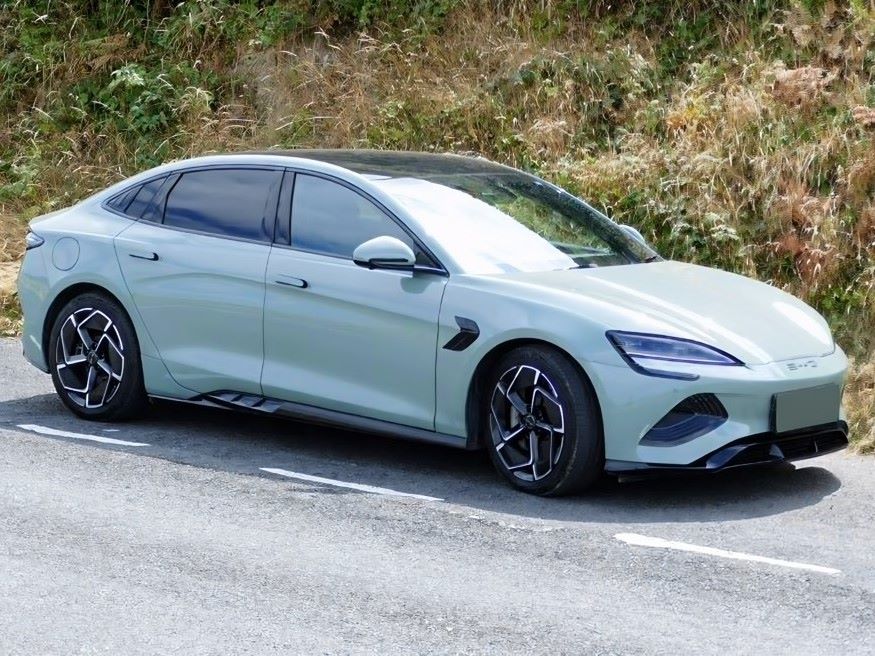
Paul drives a BYD Seal Design 82.5kWh
This is Paul’s fourth EV and he’s owned the BYD Seal less than a year. He drives 10,000-15,000 miles annually and the current mileage of the car is between 10,000-15,000 miles. He achieves 275 miles range on average, from an 80% charge.
Why did you choose the BYD Seal?
In the price range, it’s the most stylish saloon with a very good range and a good charging speed. It has a beautiful interior and a great range of features included as standard. I chose Seal Design with an upgrade for the colour ‘shadow green’.

Positives
- Beautiful exterior and interior
- very comfortable long distance driver.
Negatives
- Missing the option to select Miles/kWh setting
- maximum DC charging speed is good but could be better.
Compared to when you first bought the car, does your battery still charge at the same rate & do you still get the same range?
No degradation noted in either charging speed or range. Everything still feels as good as day one.
Have you experienced any faults with the car? If so, what have they been?
None
What are the standout technological features of the car?
The LFP (lithium ferrophosphate) battery is safer and can be charged to 100% regularly which extends the actual range compared to other EVs. The top charging speed is not as good as my previous car (Kia EV6) but the charging curve is more predictable and therefre easier to plan charging stops. The in-built navigation has very good up-to-date traffic monitoring.
Tell us something people wouldn’t readily know about your Seal
The 12V battery is also an LFP battery that is more reliable than the troublesome lead acid ones used in standard EVs. The audible warning signals are there but are far less intrusive than the ones used in most other EVs.
What electric car(s) are you interested in next and why?
The upcoming version of the BYD Seal models with the flash charging technology.
Home charging unit
myenergi zappi – the unit is very reliable, it always works. The app is brilliant in monitoring and recording not just the data of my car charger but also the data from the solar panels and the heat pump.
Electricity supplier & tariff
Intelligent Octopus Go tariff
What public charging networks would you recommend to others and why?
IONITY – their chargers are reliable and their subscription rates are reasonable. Most of the locations are conveniently located and are well looked after and are therefore easy to use.
Insurance
Tesco Insurance – nowadays, there are plenty of insurers offering car insurance for EVs with all the same standard features.
Please itemise where you’re saving money (or not) owning & running a BYD Seal
It has saved me a lot money over the years. Car tax was £0 but that is now the same. The biggest savings are the fuel costs, the home charging is very cheap at 2p per mile. The on-the-road charging is much more expensive but the average costs combined is about 4p per mile. At 15,000 miles per year, that is a saving of £1,500 to £2,400 every year (depending on fluctuating petrol prices). Servicing is also much cheaper by about £500 every year. Seven years ago, the depreciation costs were also much lower at 20% over 3 years as compared with ICE cars but that reversed about 3 years ago. Nowadays, it is about the same at 45%-50%.