
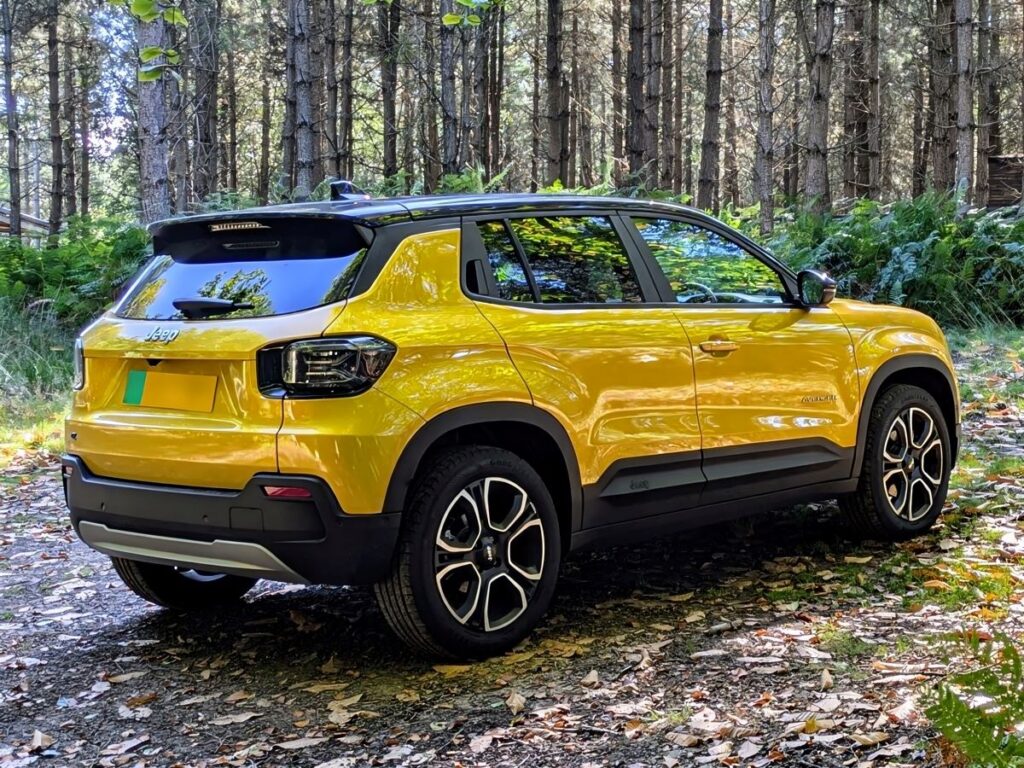
I have been driving my 2025 Jeep Avenger 54kWh Summit for between one and two years. This is my first electric car, and I have covered between 10,000 and 15,000 miles in it so far, averaging 5,000 to 10,000 miles a year.

Vehicle & Ownership Summary |
Details |
|---|---|
| Owner | Stephen |
| Make, Model & Trim | 2025 Jeep Avenger Full-Electric Summit (54kWh) |
| Ownership Duration | 1–2 years |
| Current Mileage | 10,000–15,000 miles |
| Annual Mileage | 5,000–10,000 miles |
| EV Experience | First electric car |
| Average Range (80% Charge) | 150 miles (190–200 miles in everyday use) |
| Home Charger & Tariff | Ohme 7kW wallbox on Octopus Fixed Smart |
| Insurance Provider | Aviva (via broker) |
Why I Chose the Jeep Avenger 54kWh Summit
I spent two years researching electric vehicles and waiting for small EV prices to come down. Jeep was not originally on my radar at all, until my wife and I drove past a dealership. We immediately loved the way the Avenger looked.
When we sat inside, it proved to be the most comfortable EV we had tried, and I really liked that it had physical buttons. The driving range was good enough for what we needed too. The first salesperson I dealt with was unhelpful, so I moved on to another one who was straightforward and gave us a good deal.
Real-World Range, Battery Health and Servicing
On average, I get 150 miles from an 80% charge, and in my day-to-day driving the overall range works out to around 190 to 200 miles. After 10,000 to 15,000 miles, I have not noticed any changes in battery performance.
Aside from the occasional software disagreement, I have had no issues with the car. I have decided simply to stick to the recommended service schedule of every 8,000 miles or once a year.
What I Love Most About My Jeep Avenger
Several practical qualities make the Jeep Avenger easy to live with every day:
-
Simplicity without unnecessary clutter: The car feels straightforward, and not having loads of complicated optional extras is a definite plus for me.
-
Easy-to-disable lane assistance: I can switch off the lane-keeping assistance easily whenever I want.
-
Generous ground clearance: It has plenty of clearance underneath, meaning I can easily mount kerbs if needed.
-
Comfort and quick-warming seats: My wife finds the car very comfortable, and the seats warm up quickly.
-
Positive reactions: People genuinely like the car, and it is nice when passers-by actually comment on it.
Favourite Tech and Best-Kept Secrets
In terms of onboard technology, Google Play works well. As for details that only an owner notices, the car actually comes with a rubber duck, along with a few little novelty touches hidden around the cabin that make you smile when you find them. On a more practical note, the reverse camera is also very good.
What Could Be Better
My main frustration is the Stellantis software, which is poor. If I do something that is not on its expected sequence—such as not switching the car off in the exact order it wants or getting the start-up routine slightly wrong—it seems to remember the next time I get in. It will ask me to press the brake and press the start button, and then ask me to do it all over again if I get the order wrong. I would actually find it quirky and charming if it did not wind my wife up, who then starts giving me her own instructions.
On one occasion, the car displayed a message telling me to take it to the dealership. Instead, I switched the car off, locked it, waited five seconds, and started the whole process again—and it worked completely fine. It reminded me of my days at work phoning IT and being asked if I had tried switching it off and on again.
Home and Public Charging Experience
I charge my Jeep Avenger at home using an Ohme wallbox. Now that I am used to it, I am indifferent to it—it is simply a big plug that delivers 7kW safely. I am on the Octopus Fixed Smart electricity tariff; the rate is fair, though I do wish the usage data were available in real time.
Out on the public charging network, queuing can be awkward because everyone knows the person who has waited the longest should be next, yet the technology is not there yet to manage a proper queue—I have accidentally pushed in, and I have also had it happen to me.
I previously signed up for Electroverse because I was told I would receive a discount. When I did not get it and proved it to them, they still blamed the supplier, so I no longer waste my time with them. Instead, I generally download the dedicated app for whichever network I am using, and after a while you end up with most of them. My favourite app to use is Monta—it is simple, easy to operate, and lets you clearly check that your car is charging before you walk off to grab a coffee.
Insurance & Running Costs
I insure the car personally with Aviva through a broker. It is a standard policy with no breakdown cover and no standout features—I chose it purely on price and because dealing through the broker was easy.
Overall, running an electric car is saving me a noticeable amount of money:
-
Home charging: Roughly £100 spent for around 7,200 miles.*
-
Public charging: Roughly £60 spent for around 800 miles.*
-
Fuel comparison: Compared with driving a petrol car averaging 50 mpg, that equates to roughly £1,000 saved on fuel.*
-
Higher EV expenses: Insurance costs roughly 15% more than an internal combustion car (around £50 extra), and tyres work out at roughly £100 extra per year.*
-
Net annual saving: Taking those higher insurance and tyre costs into account, I am very easily saving £850 a year on daily running costs.*
What’s Next on Your EV Radar?
Looking ahead to what might be next on my EV radar, I like the look of European electric cars, and I think the smart models look great.
Review by Stephen
*Note: Prices, savings, energy tariffs and public charging rates quoted are based on the owner’s costs at the time of submission and are subject to change.