
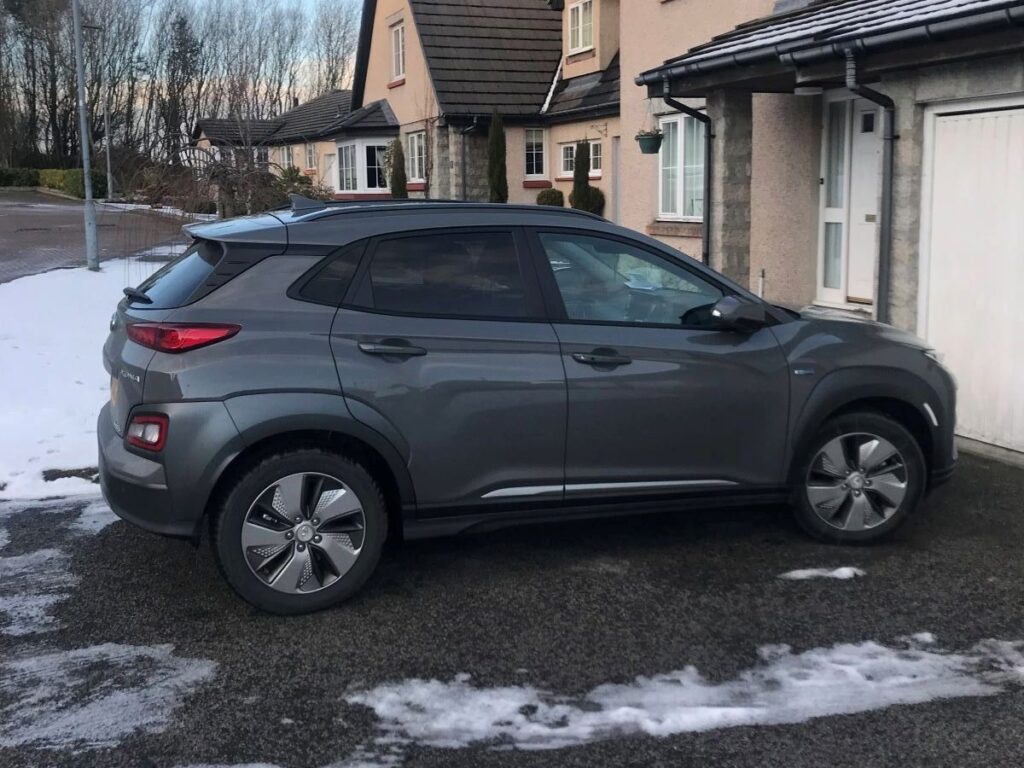
2019 Hyundai Kona Electric 64kWh Ultimate: 8-Year & 90,000-Mile Owner Review
Reviewer: Colin Gray
When you keep an electric car for seven to eight years and rack up between 80,000 and 90,000 miles, you get to know every single quirk, strength, and weakness it has to offer. As my second electric vehicle, I originally chose our 2019 Hyundai Kona 64kWh in the top-spec Ultimate trim for two simple reasons: it offered a great specification and an impressive real-world range.

Averaging between 10,000 and 15,000 miles a year, we have put this car through its paces in all conditions. Now that we have finally reached the end of our time with this particular Kona, here is my honest, long-term review of what it is truly like to live with a high-mileage Hyundai Kona Electric in the UK.
Real-World Range and Battery Degradation After 90,000 Miles
One of the biggest questions prospective used EV buyers ask is how the battery holds up over time. I can honestly say that after nearly 90,000 miles, we have not seen any significant change in either our charging rates or overall range.
While we naturally experience the usual seasonal range drop during the colder winter months, the battery health has remained remarkably consistent:
-
-
Average 80% Charge Range: Around 220 miles year-round.
-
Summer Local Driving: We still regularly achieve 250 to 270 miles around local roads in warmer weather.
- Summer Motorway Driving: At motorway speeds in the summer, we comfortably see between 220 and 240 miles.
-
Driving Experience, Tech, and Best-Kept Secrets
Our Kona has been virtually faultless for the entire time we have owned it, and it has remained a lovely car to drive right up to the 90,000-mile mark. It feels nippy off the mark, benefits from accurate, well-controlled steering, and its compact footprint makes it brilliant for slotting into tight parking spaces.
Because we opted for the Ultimate specification, the car came well-equipped for high-mileage commuting. My favourite pieces of technology are the adaptive cruise control and lane keep assist, both of which are fantastic for taking the strain out of long motorway journeys.
If I had to pick a ‘best-kept secret’that makes daily driving noticeably better, it would be the manual paddle recuperation. Having the paddles behind the steering wheel to manually adjust the regenerative braking on the fly gives you complete control over how the car slows down and recovers energy.
The Negatives and Reliability Issues
No car is completely perfect, and there are a few downsides to be aware of if you are looking at an early-model Kona Electric:
-
Boot Space & Early Tech: The boot is on the small side, and because ours is an early 2019 model, it misses out on Hyundai Bluelink app connectivity and wireless Apple CarPlay.
-
12-Volt Battery Failure: At around 16 months (and 16,000 miles), we experienced the common 12-volt auxiliary battery failure. Thankfully, Hyundai repaired and replaced this completely free of charge.
-
Main Traction Battery Recall: When the car was three years old, it was subject to a recall replacement for the main high-voltage battery. Even though we hadn’t experienced any issues with the original pack, Hyundai changed it quickly and provided us with a courtesy electric car while ours was in the workshop.

Home vs. Public Charging: What Works and What Doesn’t
The vast majority of our charging is done at home on an EDF EV tariff, which keeps our day-to-day running costs low. Because we run more than one EV, we actually have two home charging units installed, and the difference in quality between them is night and day:
-
Sync Energy Charger: Really good, reliable, and hassle-free
-
Rolec Charger: Awful. We have suffered from poor connectivity, frequent failed charges, and slow performance.
When travelling further afield, we do occasionally use the public charging network, though it remains a weak point of the EV experience. Based on my experiences, I would advise caution with both IONITY and GeniePoint—I have found both networks to be overpriced, frustrating to use, and unreliable.
Running Costs, Road Tax, and What’s Next?
We insure our Kona personally through Aviva. When comparing overall running costs against a traditional petrol or diesel car, driving electric has saved us money—absolutely.
However, it is disappointing to see how the Chancellor has begun penalising EV drivers with Vehicle Excise Duty (road tax) changes before fully taxing some older diesel models. While some diesels are still only paying £30 per year in road tax, my new electric car is now taxed at £650 per year.
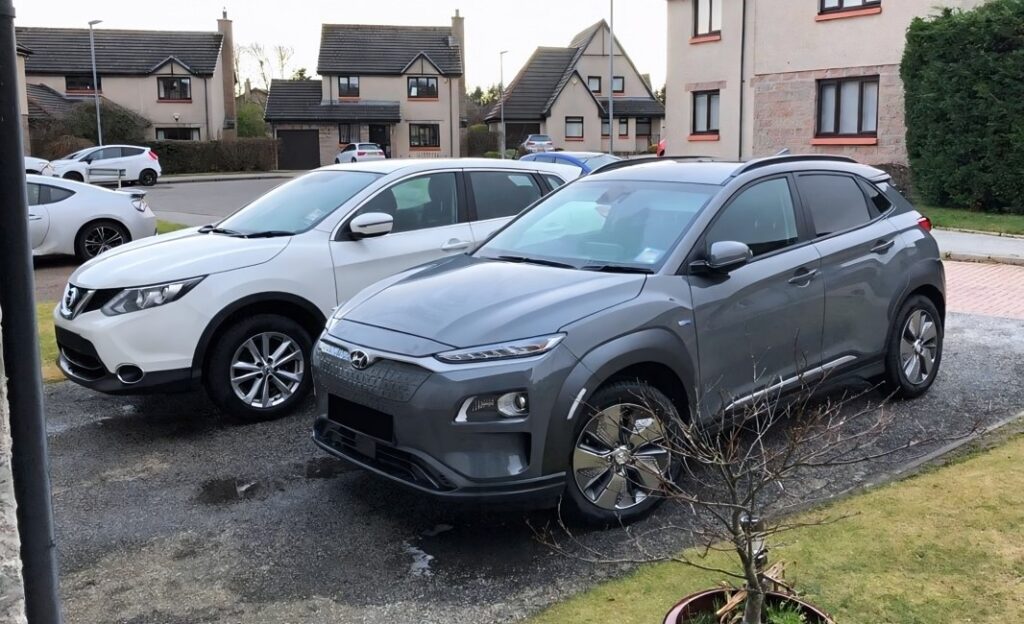
Despite the frustrating tax changes, how do we ultimately feel about the Hyundai Kona after nearly eight years? Actions speak louder than words: we have quite literally just traded our 2019 Kona in for a Kia EV6—and we loved the Hyundai so much that we also bought another Kona to sit alongside it on the driveway.