
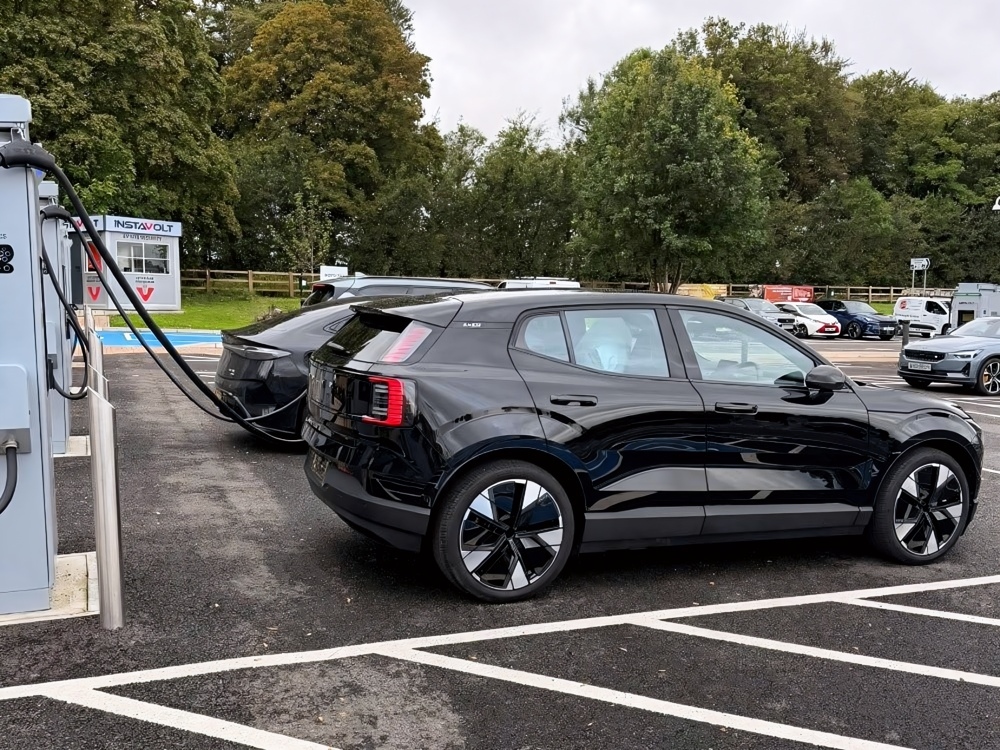
Volvo EX30 Owner Review: Why This 65kWh Twin Motor EV Saves Us £1,500 a Year
In this Volvo EX30 owner review, Paul share’s his honest first-hand experience driving the 2024 65kWh Ultra Twin Motor. After covering over 10,000 miles in his first year, here is how the real-world battery range, Google tech, and £1,500 annual running cost savings stack up.
Key Specifications & Ownership Summary
| Feature | Details |
| Make & Model |
Volvo EX30 |
| Trim & Powertrain |
Top-line Ultra trim (422hp Twin Motor) 
|
| Year of Registration |
2024 |
| Battery Size |
65kWh |
| Length of Ownership |
0–1 year |
| Current Mileage |
10,000–15,000 miles |
| Estimated Annual Mileage |
5,000–10,000 miles |
| Previous EV Ownership |
First fully electric car |
| Average Range (from 80% charge) |
220 miles |
| Battery Health |
100% |
Why I Chose the Volvo EX30
After owning a BMW 330e plug-in hybrid (PHEV) for nine years, we spent a lot of time watching EV technology and charging infrastructure improve. While the PHEV was a great interim step, you can’t forget that you’re hauling a lot of dead weight around once that small battery is flat!
When we sat down to do our household budget in the Spring and saw just how much our two cars were costing us in petrol and maintenance, we knew the time was right to finally take the step into full EV land.
The Positives
The space is incredible—it’s like a Tardis inside! The cabin is so clean, uncluttered, and very ‘Scandi’, which we find really appealing. Before deciding on the EX30, we went around all the main brands, and the equivalent models from Audi, BMW, and Mercedes were all internal combustion engine (ICE) conversions that felt small and cramped inside.
The EX30 is completely the right size for us. My wife is an artist jeweller, and this car is practical enough to swallow everything we need to cart around when trading at events, yet it remains easy and practical to park in normal-sized UK car parks.
We didn’t specifically set out to buy the Twin Motor variant, but the power puts a smile on our faces at the traffic lights (only occasionally!). It also essentially gives us four-wheel drive via the computer, though as we haven’t been through a winter with it yet, I can’t say how useful that is in real life just yet.
Any Downsides? The Negatives & Reliability
As with all modern EVs, the EX30 is heavily software-driven, and while we’ve heard of other drivers having frustrations in this area, we honestly have not had any issues whatsoever.
The single central screen has never been a problem for us. I know some people don’t like the lack of physical buttons, but there are multiple ways to use the system, and the voice controls work really well alongside the car’s automation. That’s a long way of saying we have had zero faults or issues with the car, and the battery is still performing at 100%.
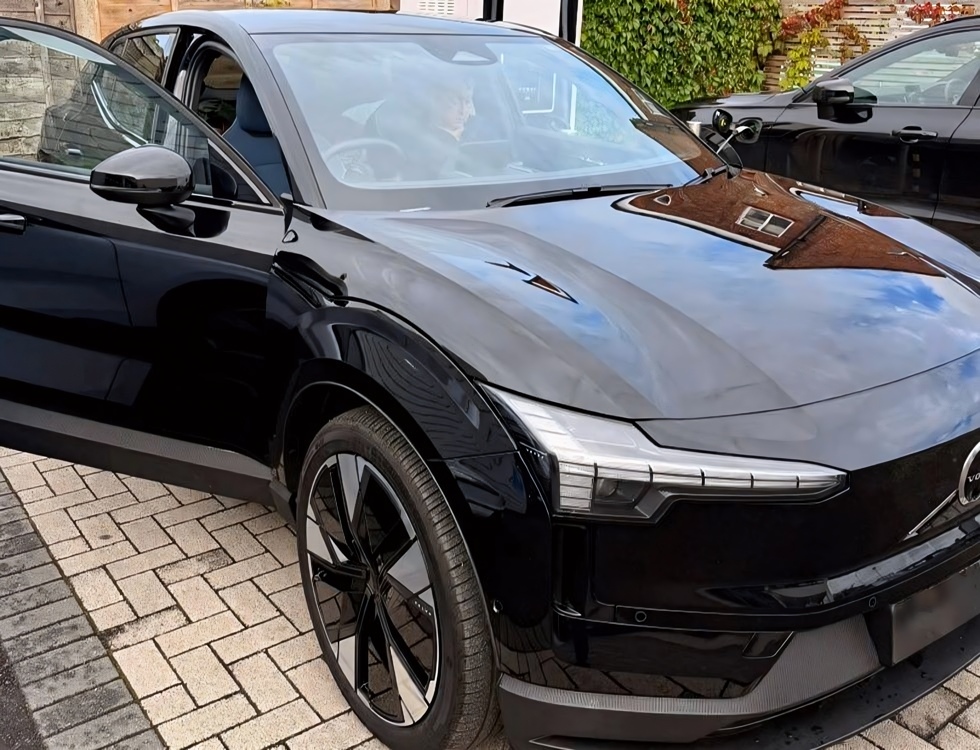
Favourite Tech & Best-Kept Secret
Stepping up from a 10-year-old car (which I loved), the whole concept of the “car as a connected device” is wonderful. Having Google fully integrated into the car and synced to my phone is brilliant.
In fact, the Google integration is easily the car’s best-kept secret because it makes driving long distances an absolute doddle. Having the ability to set a destination, specify how much battery percentage you want left at the end of the trip, and let the car tell you exactly where you will need to charge along the way is simply brilliant.
Charging: At Home and On the Road
-
Home Charging Setup: We charge at home using a Hypervolt home charging unit. There is nothing to dislike about it.
-
Energy Supplier & Tariff: Our Hypervolt unit is connected to the Octopus Go tariff, which integrates with both the charger and the car to give us seamless, cheap electricity
-
Public Charging Networks: We do use public chargers, though we are still relatively new to it and remain a bit frustrated that there isn’t “one ring to bind them all” when it comes to networks. Overall, we’ve been pleasantly surprised at how easy public charging has been. The easiest network we’ve used so far is InstaVolt. We haven’t used Tesla’s network yet—we actually pulled up to one once and realised there was no screen on the charger and that we needed an app I didn’t have at the time (which I have now downloaded!).
Insurance & Running Cost Savings
Because we were deciding on the 422hp Twin Motor model, we thought we had better check insurance costs in advance in case it proved unaffordable. Surprisingly, the quotes were very reasonable. We went ahead and chose Hastings Direct, which actually worked out cheaper than insuring our old BMW 330e!
Overall, we are very happy with the financial side of ownership. Our estimated annual savings are at least £1,500 a year, which breaks down to:
-
£1,000 in fuel savings
-
£500 saved on servicing costs
-
Marginally cheaper insurance (which still surprises me!).
What’s Next on My EV Radar?
If I had to trade in my keys tomorrow, at the top of my list right now would simply be a newer Volvo EX30! Oh, and if they ever actually build it, perhaps an electric Citroën 2CV as a second car!