
Hyundai Kona Electric N Line (2025) Owner Review: Why I Bought a Second Kona (And What Still Frustrates Me)
This 2025 model is my second electric vehicle—and in fact, my first EV was an earlier-generation Hyundai Kona, which I really enjoyed driving. When the time came to change cars, returning to Hyundai felt like a natural step.

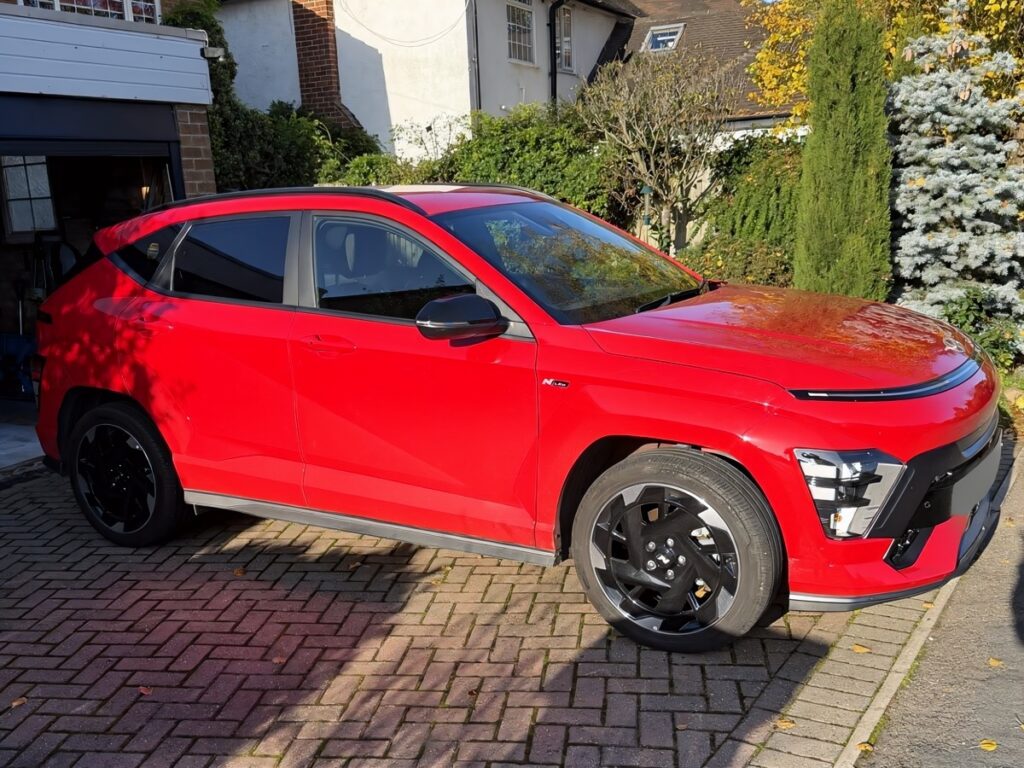
I really liked the bold new styling of the second-generation Kona, and the fact that Hyundai stretched the footprint to give it a much-improved 466-litre boot (plus a handy 27-litre cable storage ‘frunk’ under the bonnet) solved one of the main space limitations of the original car. Finished in striking red with the standard N Line exterior styling pack, body-coloured wheel arches, black roof rails, and 19-inch alloys, it looks great sitting on the driveway.
The Positives: Comfort, Pace & Winter Pre-Heating
Out on the road, the 65.4 kWh Long Range powertrain (putting out 218 PS and 255 Nm of instant torque) makes everyday driving effortless:
-
Ride & Handling: It is a very comfortable car to spend time in, yet the steering and 10.6-metre turning circle keep manoeuvrability nice and easy around town and in tight car parks.
-
Punchy Performance: Like all good EVs, the instant acceleration is great—0 to 62 mph takes 7.8 seconds, which makes joining fast A-roads and motorways a breeze.
-
Best-Kept Secret for Winter: My absolute favourite everyday feature is being able to use the Hyundai Bluelink smartphone app during the winter to remotely warm up and defrost the cabin before I even step outside the house.
The Big Frustration: That Infotainment System!
Mechanically and electrically, the car hasn’t missed a beat and I have had zero reliability issues. However, all of the car’s downsides are concentrated in one place: the dreadful infotainment system. Honestly, it deserves mentioning twice!
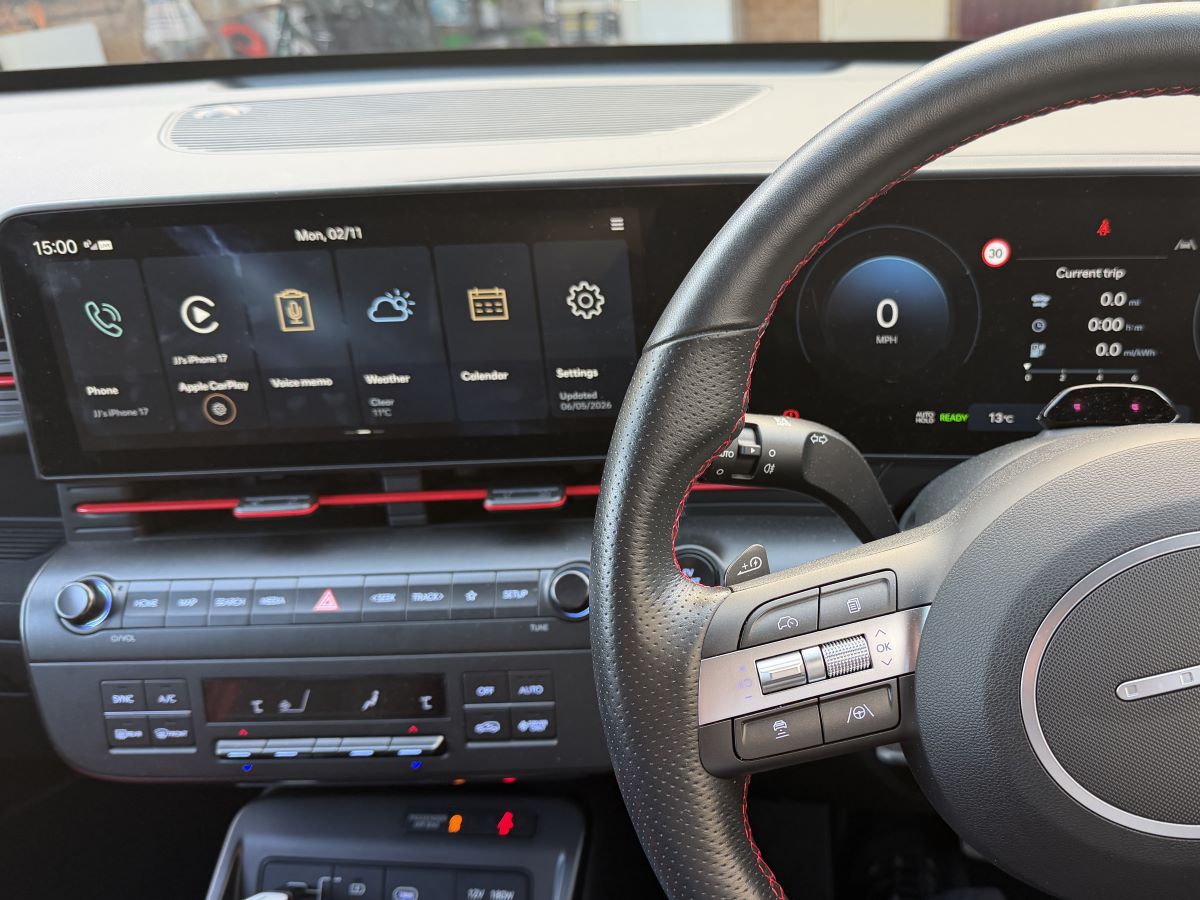
Despite the smart-looking twin 12.3-inch curved screens on the dashboard, the software ergonomics simply aren’t well thought out:
-
Amnesia on Short Stops: Whenever you stop and switch off the car—even if you only pop out for five minutes—the system forgets where you were, forcing you to manually relocate the radio station you were listening to. Every previous car I have owned simply carried on from where you left it.
-
Endless Swiping vs Driver Monitoring: Finding basic functions requires loads of swiping across menus—and while you’re looking at the screen trying to find what you need, the steering-column Driver Status Monitor camera tells you off for not looking at the road!
-
Feedback Refused: It frustrated me enough that I actually offered to help Hyundai’s engineers sort the user interface out, though sadly my offer was refused.
Real-World Range and Battery Health
With the larger 65.4 kWh battery pack and a factory-fitted heat pump as standard on the N Line, efficiency and range have been spot-on for my 5,000 to 10,000 annual miles:
-
Average Range (80% Charge): Around 200 miles.
-
Zero Degradation: After 1 to 2 years and between 5,000 and 10,000 miles on the clock, the battery is performing just as well as day one—in fact, it feels slightly better now that it is fully run in.
Home & Public Charging: The Good and the Bad (Along the A34)
I do the vast majority of my charging at home on the driveway, though I also use the public rapid charging network on longer runs:
-
Home Wallbox & Tariff: I have a home charging unit installed—it isn’t the fastest unit on the market, but it works reliably every time. My electricity is supplied by EDF, and I’m on a good tariff that keeps home top-ups very affordable.
-
Best Public Charging Experience: Tothill Services (Shell Recharge) on the A34 near Burghclere. The instructions are printed clearly right on the charger, you plug it in, and it simply works.
-
Worst Public Charging Experience: Just a few miles down the road at Chieveley Services (M4 Junction 13 / A34). On four or five separate occasions, the Gridserve chargers there have failed to connect to the car, and the on-screen instructions are barely helpful when things go wrong.
Running Costs & Final Verdict
While the initial purchase price of the new Kona Electric was quite high, charging at home on a good EDF tariff has saved me a lot of money compared to buying petrol or diesel, and the cost of its first scheduled service was very reasonable too.
Would I stay electric next time? Definitely—and if I were to trade in my keys tomorrow, the new Ford Capri looks very smart on the road, so that is top of my list to test drive next.
Review by Jon